
Myanmar Reconstruction Frameworks and Renewable Utility Assets Drive Secondary Market Rebound
Permitted annual FDI under the Myanmar Investment Commission (MIC) ranges between US600 million and US850 million
(MYANMAR) Myanmar’s infrastructure and real estate sectors are operating in an uneven operational landscape defined by selective regional stabilization, emergency civil rehabilitation, and bilateral corridor diplomacy. While national economic expansion faces constraints from foreign-exchange controls and sanctions, capital works have anchored around two primary areas: localized post-conflict reconstruction across stable urban perimeters, and power-utility generation backed by Chinese, Russian, and regional private equity.
As the western littoral gateway for China’s Belt and Road Initiative via the China–Myanmar Economic Corridor (CMEC), Myanmar provides southwestern China direct access to the Bay of Bengal. Concurrently, secondary property markets in Yangon and Mandalay are seeing capital reallocation toward physical assets as domestic enterprises and private buyers deploy depreciating Myanmar Kyat (MMK) into commercial warehouses and income-generating real estate.
Market Baseline
• GDP Contribution: Construction accounts for 4.2% to 4.8% of real GDP, shifting away from speculative high-rises toward utility upgrades, structural repairs, and industrial facilities.
• Sector Growth: Estimated at +1.2% to +1.8% year-on-year, stabilizing after contractions of -15% to -20% in 2021–2022.
• FDI Inflows: Permitted annual FDI under the Myanmar Investment Commission (MIC) ranges between US600 million and US850 million, led by China (including Hong Kong) and Singapore, with emerging Russian joint ventures in energy transmission.
• Urbanization & Pipeline Value: Urbanization stands at 31.8%, centered on Yangon and Mandalay. Active pipeline capital across power, industrial enclaves, and port terminals totals US7.2billiontoUS8.5 billion.
Development Forecast (2026–2031)
The civil construction and infrastructure market is projected to expand at a 3.4% to 3.9% CAGR through 2031.
• Strategic Priorities: Ground-mounted solar PV and hybrid mini-grids across central dry zones; logistics warehousing in Yangon industrial suburbs (Mingaladon, Hlaing Tharyar); and phased port corridors for the Kyaukpyu Special Economic Zone (SEZ).
• Catalysts & Risks: Fast-tracked MIC approvals for foreign-funded energy projects and bilateral renminbi (RMB) settlement mechanisms serve as catalysts. Major risks include severe kyat volatility, central bank FX rationing, import curbs, high freight premiums, and engineering labor shortages.
Key Flagship Projects
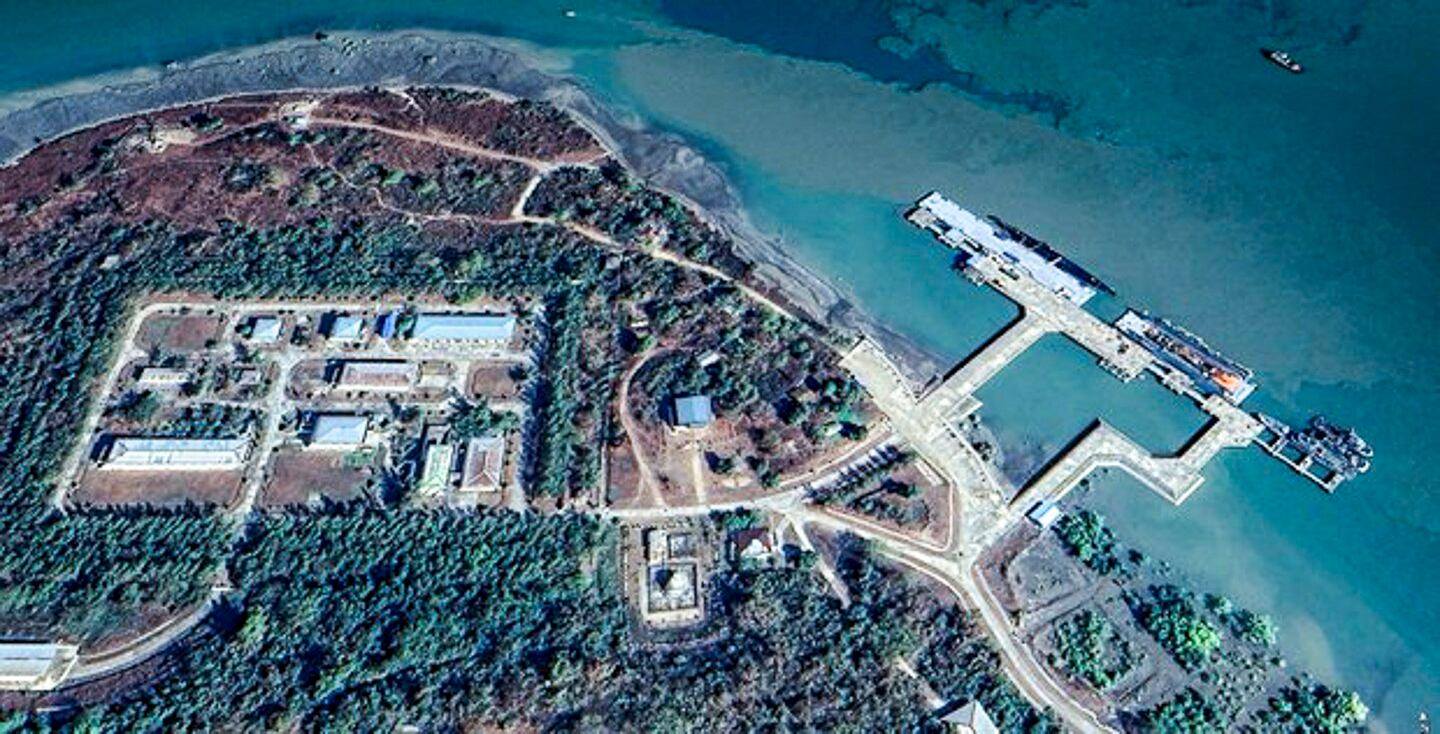
Kyaukpyu SEZ Deep-Sea Port
• Type: Maritime Trade Corridor | Status: Procurement & Site Prep
• Key Metrics: A US$1.3 billion initial-phase deep-water terminal developed by CITIC Consortium (70%) and the Myanmar Government (30%). It adds four deep-water berths across Made and Yanbye Islands to handle 7 million TEUs annually. Procurement centers on marine-grade piling steel, sulfate-resistant concrete, and dredging works.
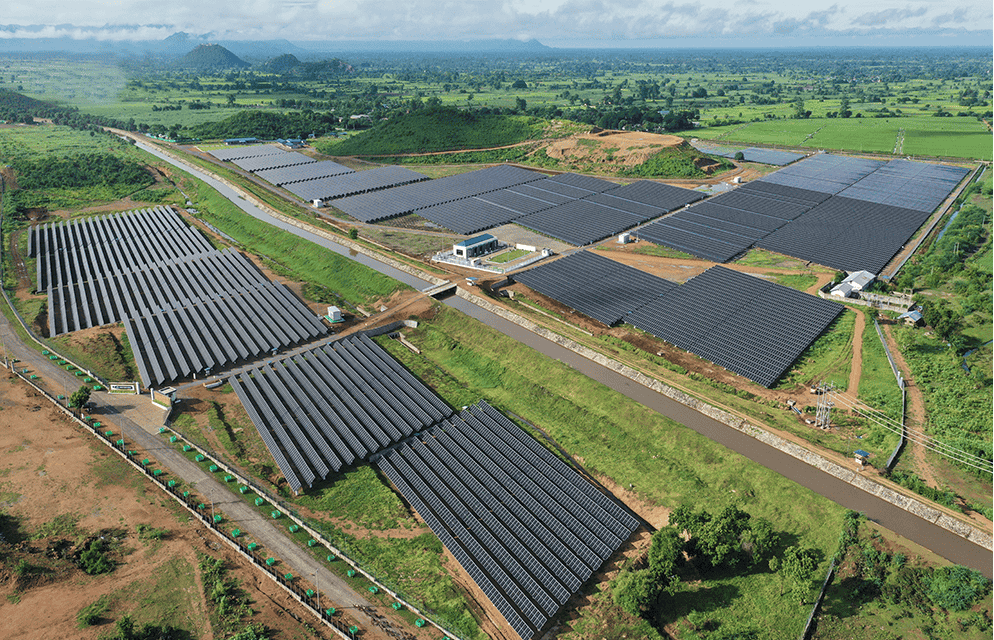
Central Myanmar Utility-Scale Solar PV Pipeline (500 MW)
• Type: Renewable Energy | Status: Under Construction
• Key Metrics: Cumulative investment exceeds US$450 million across Magway, Mandalay, and Naypyidaw, executed under BOT contracts by Chinese EPCs (PowerChina, SEPCO) with the Ministry of Electric Power. Involves over 1.1 million monocrystalline bifacial panels, central inverters, and 132kV/230kV substations.
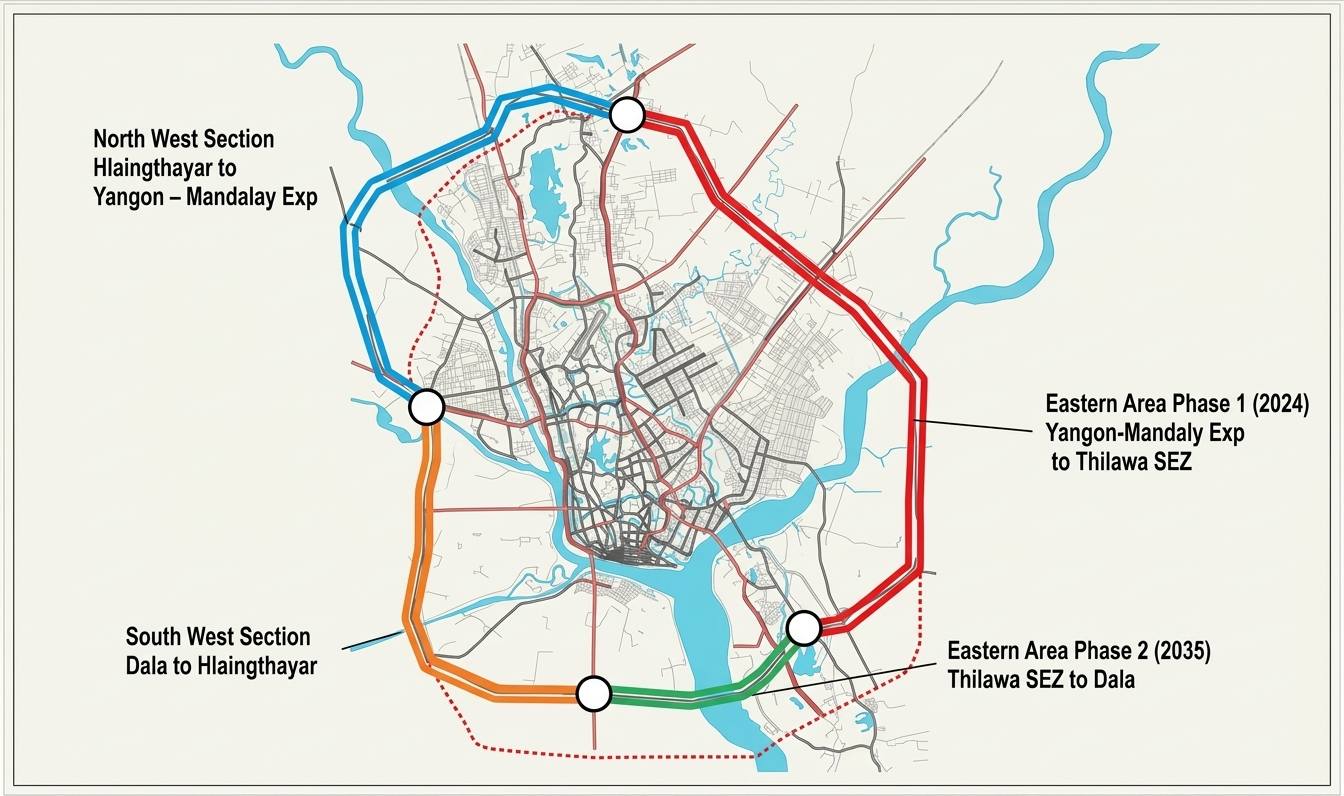
Yangon Outer Ring Road & Logistics Corridor
• Type: Highway Infrastructure | Status: Phased Civil Works
• Key Metrics: Valued at over US$350 million, supervised by the Ministry of Construction and YCDC. Upgrades perimeter highways linking Thilawa SEZ to northern freight routes. Procurement focuses on asphalt concrete, bridge structures, aggregate base-coarse stone, and earthmoving machinery.
Market Outlook
With traditional international development lenders disengaged, project financing has shifted entirely to bilateral sovereign deals, Chinese state-owned enterprise equity, and domestic BOT concessions utilizing offshore renminbi clearing.
Because Myanmar lacks primary domestic steel manufacturing, all structural steel, rebar, and mechanical assets must be imported overland or via sea. In addition, chronic local power deficits force contractors on technical projects to source imported cement and specialty admixtures. Foreign participation remains most viable in utility-scale renewables under sovereign power purchase agreements, bonded industrial warehousing, and essential transport repair tenders.
(Reported by BuildMartASEAN)