
Thailand Mass-Transit Densification and Industrial Corridor Megaprojects Reshape Asset Pipeline
Thailand’s construction pipeline is shifting from speculative residential towers toward logistics-enabled, transit-adjacent, and industrial assets
(THAILAND) Thailand's capital projects sector is pivoting toward heavy rail infrastructure, the expansion of the Eastern Economic Corridor (EEC), and Transit-Oriented Developments (TOD) across the Bangkok Metropolitan Region. Governed by the 20-Year National Strategy (2018–2037), the kingdom is strengthening its role as mainland Southeast Asia’s primary logistics crossroad.
Strategic cross-border links led by the Thai-China High-Speed Rail corridor and deep-sea industrial ports are shifting regional supply chain dynamics. In Bangkok, transit expansion has stimulated mixed-use rezoning around major interchange hubs. While mid-tier residential condominiums face inventory overhang and tighter lending, institutional capital is rapidly reallocating toward industrial parks, automated logistics hubs, hyperscale data centers, and transit-linked commercial nodes.
Market Baseline
• GDP Contribution: Construction accounts for 2.6% to 2.8% of real national GDP, generating roughly THB 105 billion to THB 115 billion quarterly.
• Sector Growth: Expanding at +4.2% to +5.1% annually, driven by state infrastructure disbursements and civil engineering tenders.
• FDI Inflows: Board of Investment applications surpassed THB 840 billion, led by Singapore, China, and Japan across EV manufacturing, electronics, and digital infrastructure.
• Urbanization & Pipeline Value: Urbanization reached 54.8%, with Bangkok and the EEC capturing over 68% of registered commercial and multi-family high-rise space. The active national project pipeline exceeds USD 30.8 billion (THB 1.1 trillion).
Development Forecast (2026–2031)
The civil infrastructure sector is projected to maintain a 5.5% to 5.9% CAGR through 2031, outpacing broader economic expansion.
• Strategic Priorities: Completing inter-city high-speed and double-track freight corridors; developing specialized industrial parks in the EEC for EV and battery manufacturing; automating container yards at Laem Chabang; and densifying western segments of Bangkok's mass-transit network.
• Catalysts & Headwinds: Board of Investment tax incentives for green facilities and digital infrastructure serve as primary tailwinds. Conversely, elevated household debt (~90% of GDP), volatile input material prices, and skilled labor shortages remain key risks.
Key Flagship Projects
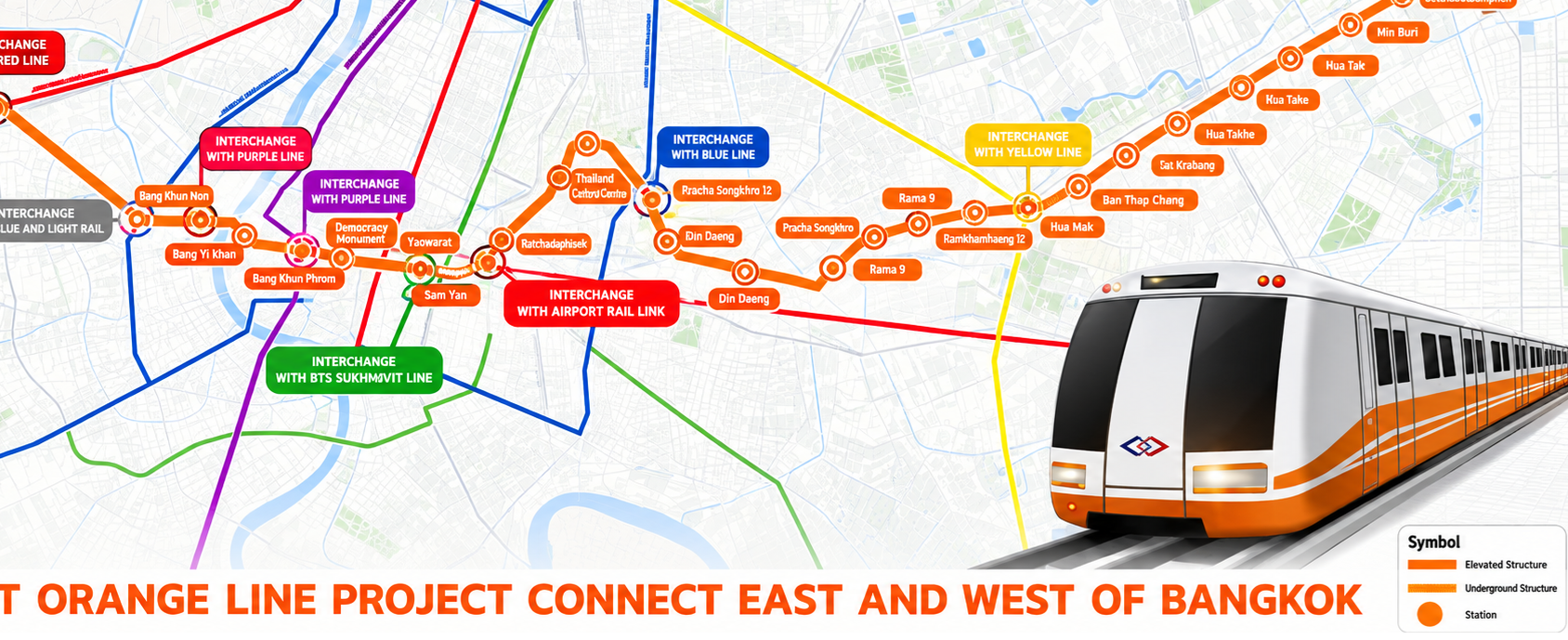
MRT Orange Line (Bang Khun Non – Min Buri)
• Type: Urban Mass Transit | Status: Under Construction
• Key Metrics: A THB 140 billion (USD 4.0B) project spanning 35.9 km and 28 stations. The western alignment requires deep shield tunneling beneath historic Bangkok and the Chao Phraya River. Developed under a 30-year PPP by BEM and CH. Karnchang, driving heavy demand for precast tunnel segments, waterproofing systems, and MEP plant packages.
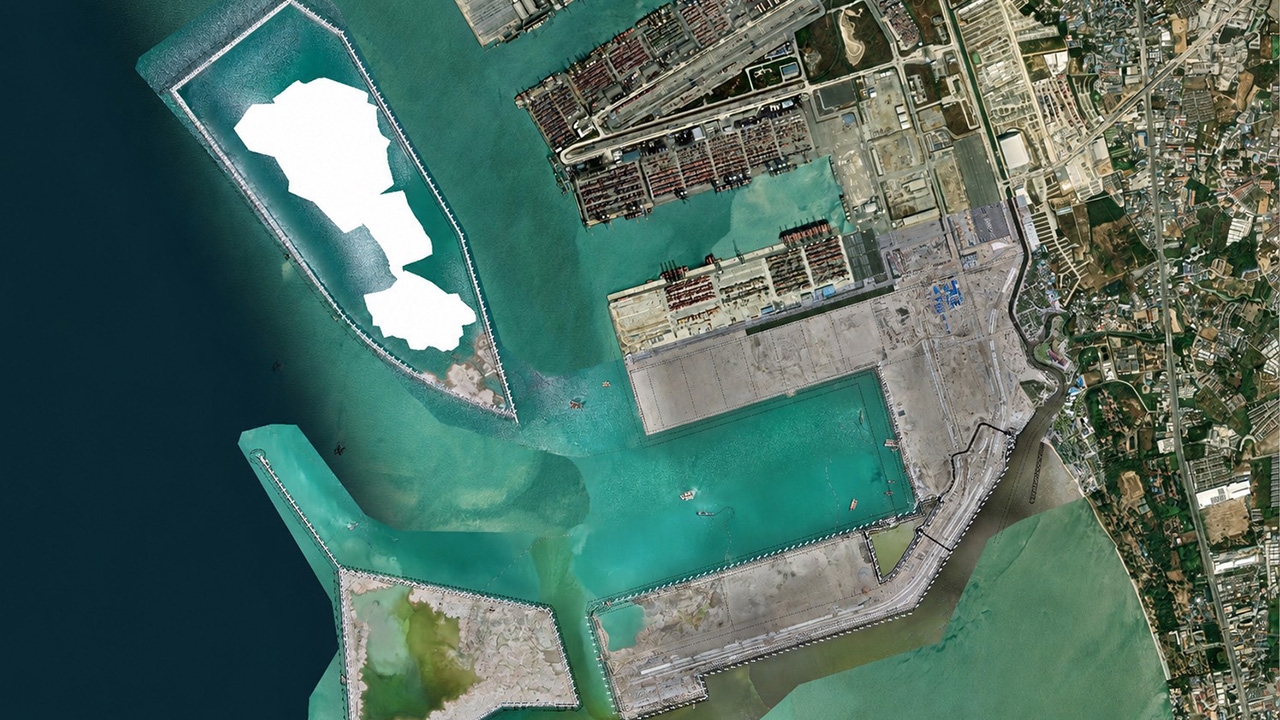
Laem Chabang Port Expansion Phase 3 (Terminal F)
• Type: Maritime Logistics | Status: Under Construction
• Key Metrics: A THB 114 billion (USD 3.25B) EEC concession operated by GPC International Terminal. Deepens harbor drafts to -18.5 meters to service Ultra-Large Container Vessels, boosting total throughput to 18 million TEUs annually and scaling rail-freight transfers to 30%. Sourcing focuses on marine-grade cement, anti-corrosion rebar, and automated ship-to-shore (STS) cranes.
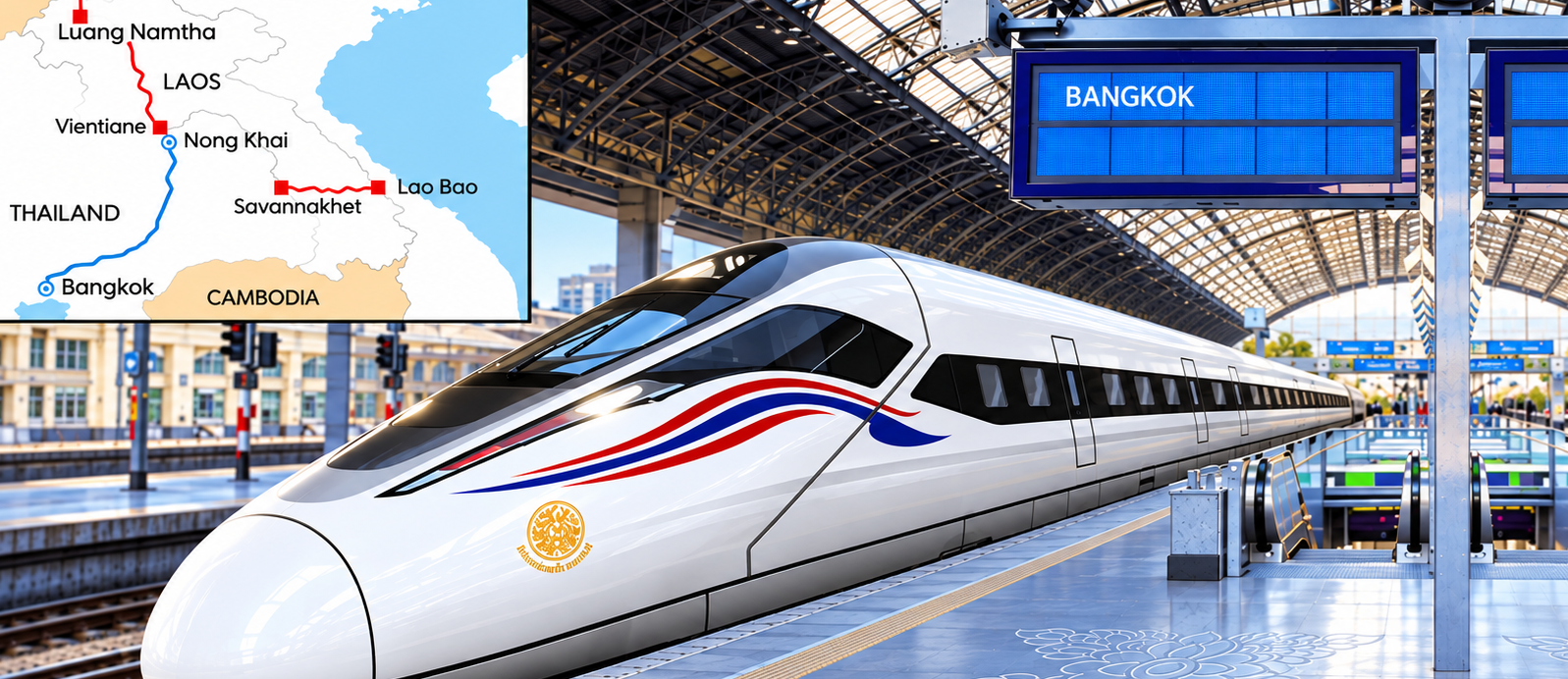
Thai-China High-Speed Rail (Phase 1: Bangkok – Nakhon Ratchasima)
• Type: Inter-City High-Speed Rail | Status: Under Construction
• Key Metrics: A THB 179.4 billion (USD 5.1B), 253 km electrified corridor built for operating speeds of 250 km/h. Executed by major domestic contractors alongside Chinese rail engineering partners, driving sustained procurement of post-tensioning steel strands, precast viaduct girders, ballastless track slabs, and substation equipment.
Market Outlook
Thailand’s construction pipeline is shifting from speculative residential towers toward logistics-enabled, transit-adjacent, and industrial assets. Capital allocation increasingly relies on Public-Private Partnerships (PPPs) and infrastructure funds to manage sovereign debt limits.
For EPC contractors and material suppliers, value is concentrating in high-performance niches: low-carbon concrete, advanced structural waterproofing, pre-engineered steel buildings (PEB), and modular systems built to LEED and TREES green standards. Equipment demand will remain centered on tunnel boring machines, deep bored piling rigs, and mechanized track-laying fleets through 2030.
(Reported by BuildMartASEAN)